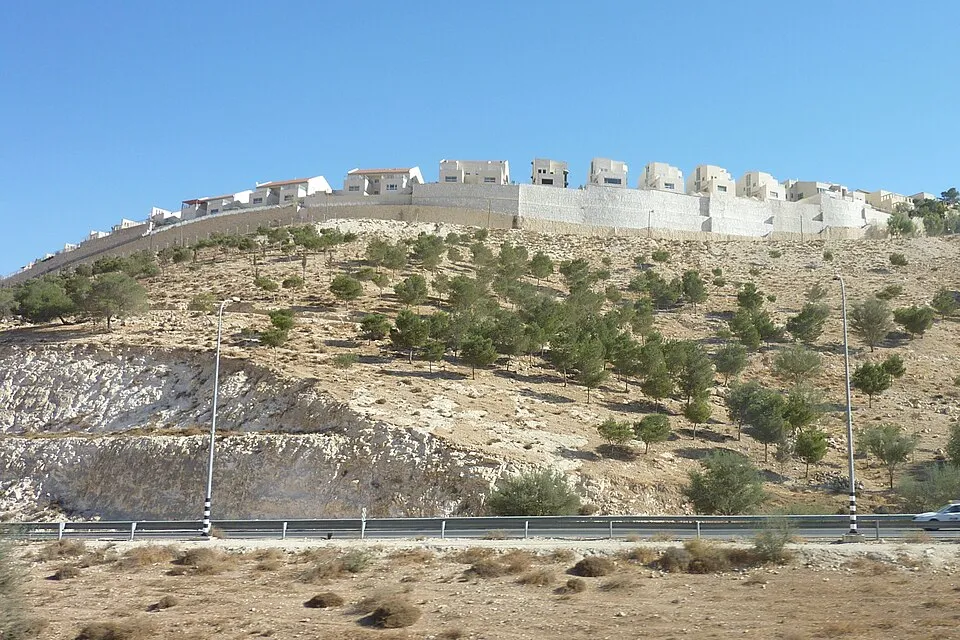
Israel’s attorney general, Gali Baharav-Miara, has ordered the Israel Land Authority and the Ministry of Housing not to open the tender process for the E1 settlement area in the occupied West Bank, The Guardian reported. She stated that any decision on settlement expansion should be taken by the next government, not by the caretaker administration led by Benjamin Netanyahu. The tender covered more than 3,401 housing units, according to The Guardian.
The deferral followed sanctions announced by the United Kingdom on Tuesday, 17 November, shortly before the final deadline for E1 bids, according to Al Jazeera and Middle East Eye. Israeli officials insisted that the decision was not a response to the sanctions, Middle East Eye and The Guardian reported.
The British and Australian measures
The UK imposed asset freezes and director disqualifications on eight Israeli construction, property development and architectural firms, including Har Hevron Development Company Ltd, Hemdat Shomron Ltd and SAG (Velvel) Construction and Development Ltd, Middle East Eye reported. The UK also sanctioned Tzav 9, which the Foreign Office described as a movement that has organised blockades of crossings, ports and roads used by aid convoys bound for Gaza. Tzav 9 told the BBC that it has “always protested peacefully”.
Foreign Secretary Ed Miliband said: “My message on E1 is clear: do not bid, do not build, and do not profit from the destruction of the two-state solution.”
Australia’s foreign affairs minister, Penny Wong, announced sanctions on three individuals and four organisations, among them settler leader Daniella Weiss, the Nachala movement, settler Eliav Libi and the Eyal Hari Yehuda construction company, The Guardian reported. Wong said it was the first time Australian sanctions had targeted a construction company involved in building settlements, and that the measures were coordinated with the UK.
Reactions
Israel’s caretaker foreign minister, Gideon Saar, called the British sanctions a “hostile act targeting private, law-abiding companies” and said Israel would respond with countermeasures, the BBC reported. The Palestinian foreign ministry welcomed the sanctions and urged other states to follow, according to the BBC.
In a joint statement, the foreign ministers of 16 Arab and Muslim-majority states, including Egypt, Saudi Arabia, Jordan, Qatar, Turkey, Indonesia, Pakistan and Palestine, welcomed the British and Australian decisions, Middle East Eye reported. The ministers described the measures as consistent with UN Security Council Resolution 2334 and renewed their condemnation of the E1 plan.