Widespread Inundation Across Displacement Camps
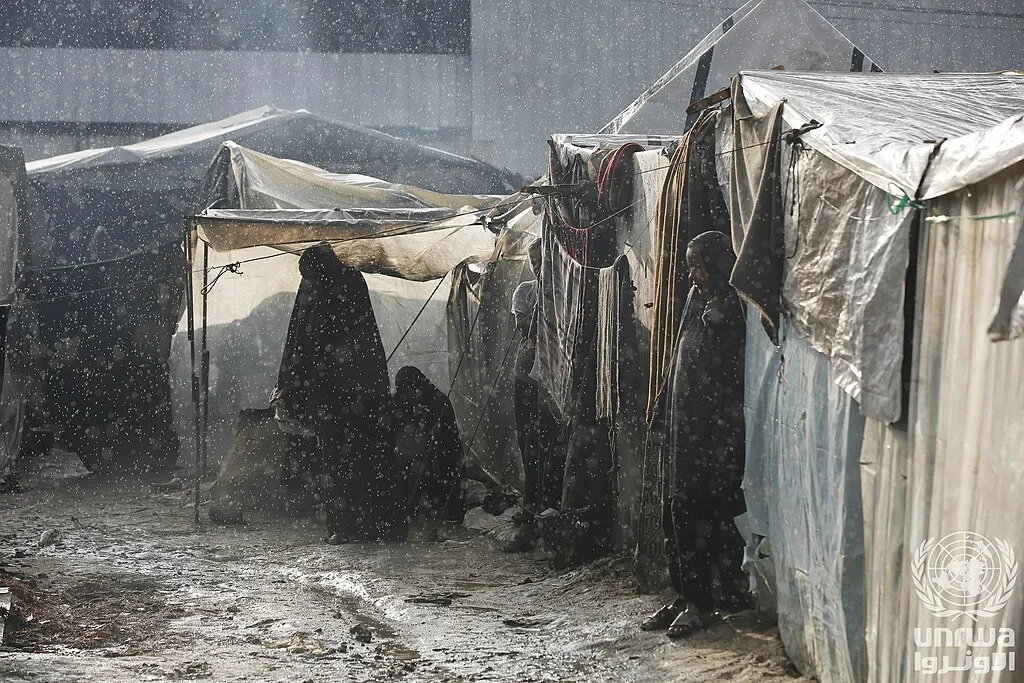
Heavy rainfall during the weekend of November 6–7 flooded tens of thousands of makeshift shelters across the Gaza Strip, leaving displaced families exposed to freezing temperatures and rising sewage water, humanitarian agencies reported. Gaza's Civil Defence received more than 1,500 distress calls as torrential rains swept through waterlogged camps in regions including Gaza City and Deir al-Balah.
According to Save the Children, around 70,000 tents were inundated in a single day. The aid organization reported that more than half a million children in Gaza are now facing their fourth winter in torn tents or makeshift shelters. With temperatures dropping as low as 5°C, many children are burning garbage to stay warm because Israeli restrictions continue to block the entry of winterization supplies, mobile homes, and shelter materials.
Hundreds of Thousands Face Severe Winter Risks
A joint flood-risk analysis by the International Organization for Migration (IOM) and the Site Management Agency (SMA) Cluster estimated that approximately 761,000 people—comprising 138,000 families—in Gaza's displacement sites are likely to be impacted by flooding this winter. The report emphasized that only 40 percent of the nearly 1,700 active displacement sites currently have site management support.
In an update issued on November 9, humanitarian partners documented 268 site alerts logged through IOM’s Zite Manager platform between November 6 and November 8. Of these, 264 alerts involved heavy rain and flooding incidents across 261 unique displacement sites. The UN Office for the Coordination of Humanitarian Affairs (OCHA) and partner agencies noted that total damage is likely far higher, as the alert system only captures data from sites where participating humanitarian partners operate.
An assessment by the Palestine Shelter Cluster further indicated that about 58 percent of Gaza’s population—roughly 1.2 million people, including over 560,000 children—are living in "critical or catastrophic" shelter conditions following years of repeated displacement and harsh weather.
Desperate Conditions and Lack of Shelter Materials
Karl Baker, Head of IOM’s Gaza programme, reported on conditions after visiting displacement camps around Gaza City. Baker described seeing collapsed shelters and children wading through knee-deep floodwater. He stated that IOM has distributed thousands of tents and tarpaulins, but emphasized that available supplies fall far short of the scale of need.
Baker urged international donors and authorities to allow timber emergency shelter kits, prefabricated housing units, and caravans into Gaza to protect families. In managed sites, teams have constructed drainage channels and placed sandbags made from repurposed flour bags to protect pathways. However, in unmanaged camps across Deir al-Balah and other areas, residents struggled to drain water by hand and built temporary earthen barriers as raw sewage mixed with rainwater, destroying essential belongings.
Mockery from Israeli Media Figure
As displaced families struggled to salvage their belongings, Israeli weather forecaster Tzachi Peleg posted comments on Facebook mocking the victims of the flooding. According to reports from Al-Jarmaq News and Quds News Network, Peleg wrote that Gazans
"went out to fish in the morning and not to the beach"and added that he had no problem if
"people don't survive either."